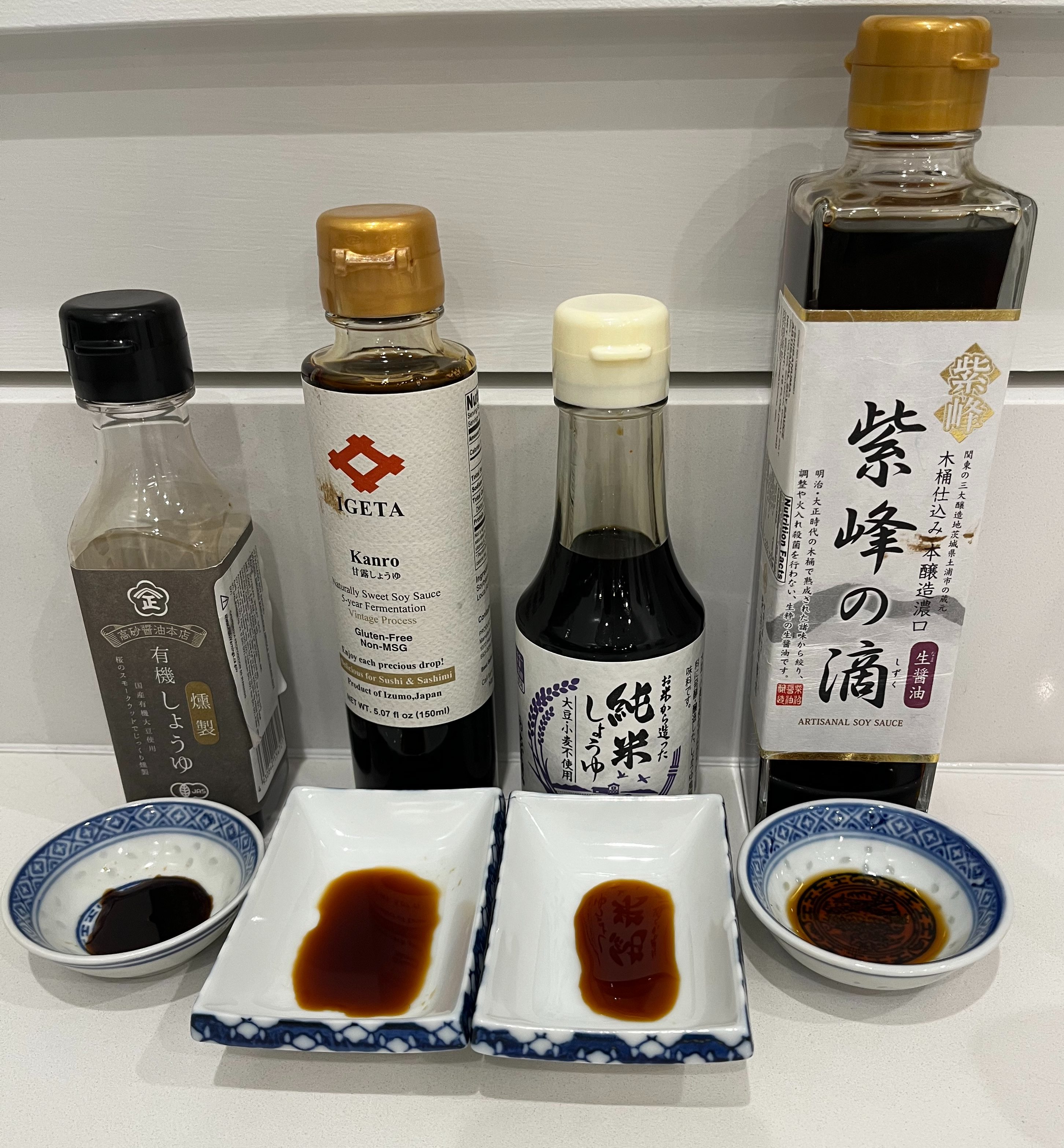
Shibanuma Koikuchi Pure Soy Sauce (far right), has the clearest and thinnest color of the four sauces but has a bold long-lasting taste. This sauce is crafted by a 330 year-old, soy sauce maker, that uses traditional production methods, with wooden barrels that have been in use for decades for brewing. This sauce is recommended for sushi and sashimi, particularly white fish. This is an unpasteurized soy sauce so the enzymes in the sauce are still alive.
Junmai (Pure Rice) Gluten-Free Shoyu (second to right), is made from sake lees (residual yeast left over from sake production), rice, rice koji, salt and water. This rice ‘soy sauce’ is made by Taisho-ya Shoyu, an esteemed soy sauce and miso specialty maker in Shimane Prefecture. The company spent 10 years to develop this sauce as a gluten free substitute for soy sauce. This sauce is lighter bodied, like a pinot noir of soy sauce, and is delicious.
Kanro Soy Sauce (second to left) is a medium bodied sweet soy sauce that is darker and more like a table soy sauce. This soy sauce is brewed without salt, but instead with another soy sauce which has been previously aged for two and a half years in cedar barrels. This mixture is brewed and then aged for another two and a half years, bringing the total brew/aging time to 5 years. Kanro Soy Sauce is brewed by Igeta Shoyu, a century-old brewery in Shimane Prefecture, which has produced this sauce since 1912. This sauce is recommended for use as a dipping sauce or as a finishing sauce, not as a cooking sauce.
Smoked Marudaizu (Whole Soybean) Soy Sauce (far left) is thick and deep black in color and has a smoky flavor that is a quick intense hit of umami and smoky aroma. To achieve this flavor the sauce is smoked with cherry wood, rather by using an artificial smoke aroma liquid. Takasago has been making soy sauce in the Izumo region of Japan since 1877. This was my favorite of the four sauces and makes a great dumpling dipping sauce.

 The search for the world's best dumplings